

7 Signs of a Bad Rotavator Cross: Warning Signs Before It Fails Mid-Field
Written by the MOD Plus Technical Team Reviewed for technical accuracy by the MOD Plus Technical Team. Last updated: August 3, 2026

Table of Contents
Your rotavator drags for a second, then jerks back to speed. You're three hours into ploughing before the next rain, and stopping now isn't an option — but ignoring it isn't either. Since 1978, MOD Plus has pulled thousands of failed crosses out of Indian rotavators, and almost every one showed the same warning signs of a bad rotavator cross days or weeks before it seized. This checklist covers exactly what to look, feel, and listen for — so you know whether yours needs attention today or can wait until evening.
Why Catching These Rotavator Cross Failure Signs Early Matters
A rotavator cross rarely fails without warning. It wears gradually — a little play, a little heat, a little grease loss — until one shock load snaps it completely, usually mid-rotation under full PTO torque. Catch it early and you're looking at a quick part swap in your own shed. Miss it, and a snapped cross can bend the yoke, chew up gearbox teeth, or crack the triangular tube, turning a small fix into a full rotavator breakdown and a multi-day workshop job.
1. Visible Play When You Rock the Yoke by Hand
Switch off the PTO, grab the yoke on either side of the cross, and rock it side to side and up and down. A healthy cross holds tight — no wobble, no clunk, no give. Any perceptible play means the needle bearings inside the cross cups have started wearing away, letting the trunnions move inside their bores.
This rotavator cross wear accelerates fast once it starts. A cross with barely noticeable play today can double that play within a week of continuous ploughing, especially in dusty, high-load fields. It won't necessarily stop the rotavator immediately, but every hour of use hammers the worn bearings harder against the yoke ears.
Check this weekly during peak season. If you feel any movement at all, plan a replacement within the next few days of work — don't wait for it to get worse.
2. Grease Leakage or Discoloration at the Cross Cups
Wipe a finger along each of the four cross cups where they meet the yoke. Fresh grease should look clean and light. Dark, gritty, or watery grease — or grease actually seeping out past the seal — means the cup seals have failed and metal particles are already mixing into the lubricant.
Once a seal goes, the bearing runs partly dry. Heat builds, wear accelerates, and the grease you top up simply leaks straight back out. Re-greasing without fixing the seal only delays the problem by days, not weeks.
This is a moderate-urgency sign on its own, but combined with visible play (Sign 1), it means the cross is in active failure and should be swapped before your next full day of ploughing.
3. Metal Shavings or Fine Dust Near the Cross Housing
After a run, check the ground and housing around the cross for fine metallic dust or tiny silver shavings clinging to the grease or settled in the housing. This is the needle bearing cage or the trunnion surface grinding itself away under load — a clear sign of advanced internal wear.
Unlike play or grease discoloration, which you have to actively check for, metal shavings mean the wear has progressed far enough to be shedding material. This isn't a "monitor it" sign — it's a "this cross is actively destroying itself" sign.
If you spot shavings, treat it as urgent. Finish the current pass if you're mid-field, then stop and inspect properly before running the rotavator again. Continuing to run a shedding cross risks a sudden, complete seizure.
4. Difficulty Engaging or Disengaging the PTO Shaft
A healthy PTO connection engages and disengages in one smooth motion. If you're fighting the lever, feeling a harsh grinding or catching sensation as the shaft engages, or the rotavator hesitates before picking up speed, the cross assembly is likely misaligned from wear inside the yoke bores.
This happens because worn cross bearings let the trunnions sit slightly off-centre. That small misalignment throws off how cleanly the PTO shaft seats, especially under load or at an angle on uneven ground.
It's easy to blame the lever or the shaft itself, but if grease, play, or heat checks (Signs 1, 2, and 5) also flag issues, the cross is almost always the real culprit. Get it inspected before the next long field session.
5. Unusual Heat at the Cross Joint After a Short Run
Ten to fifteen minutes into operation, carefully touch the cross housing — not the moving parts. It should be warm at most. Too hot to hold your hand on for more than a second or two after only a short run means the bearings are running dry or under excess friction.
Heat is one of the fastest-moving warning signs on this list. A cross that's overheating is actively cooking its own grease, which thins it out and speeds up wear further — a cycle that worsens by the hour, not the week.
Stop the rotavator immediately if the housing is genuinely hot, not just warm. Let it cool, check the grease and play, and don't restart until you've confirmed what's causing it.
6. Visible Cracks, Deformation, or Scoring on the Cross Body
With the yoke removed or the cross exposed, look closely at the four trunnions and the central body. Any hairline crack, flattened edge, or deep scoring mark on the metal itself — not just the bearing surface — means the cross has taken a shock load beyond its rated strength.
This usually comes from hitting a buried rock, root, or hard patch at speed, or from running a cross that was already worn and let the load transfer unevenly. Unlike the wear-based signs above, this is structural damage, not gradual degradation.
There's no monitoring option here. A cracked or deformed cross can fail completely without further warning, often at the worst possible moment under full torque. Replace it before running the rotavator again.
7. Vibration or Noise During Operation
A rotavator cross that's wearing out often makes itself known through a rhythmic clunk, knock, or vibration that changes with PTO speed rather than engine speed — not a constant, engine-driven noise. This is a genuine warning sign, but the causes and diagnostic steps deserve more space than this checklist allows.
We cover vibration and noise diagnosis in full detail in a dedicated guide on the MOD Plus blog. If this is the only sign you're seeing, that's the right next stop; if it's showing up alongside any of the other six signs above, treat it as confirmation and move straight to the section below.
What to Do If You Spot Any of These
If you've confirmed even one of these signs — especially play, heat, shavings, or cracking — the cross needs replacing, not monitoring. Running it further risks a mid-field seizure that can also damage the yoke, gearbox teeth, or triangular tube around it, turning routine rotavator maintenance into a bigger repair bill.
Match the replacement to your rotavator's exact cross size and yoke lock type before you buy; fitting the wrong variant is the most common reason a "new" cross fails again within weeks. Our Rotavator UJ Cross Buyer's Guide walks through exactly how to identify your cross size and pick the right match, and our Rotavator Cross & Yoke Range Guide breaks down the full range across tractor and rotavator brands if you're unsure which yoke type you're running.
Once you know the size, buy OEM-grade — cheap crosses cost more in downtime than they save in price.
Why Genuine Matters
Cheaper aftermarket crosses often use lower-grade steel and softer bearing races that wear exactly like the signs above — just faster, and sooner after installation. The parts look identical from the outside; the difference is in the hardening process and material spec, which isn't visible until the cross is already failing again.
Genuine, correctly specified components hold their tolerances longer, run cooler under load, and simply need this checklist less often. It's the difference between replacing a cross once a season and replacing it three times.
FAQ
How often should I check my rotavator cross for wear? Inspect it at the season's start and every 100–150 operating hours during peak use. A quick weekly play-and-heat check takes under two minutes and catches most problems early.
Can I keep using the rotavator if I only spot one mild sign?
A single mild sign usually means days, not hours, before it becomes urgent. Check it daily until replaced, and stop immediately if a second sign appears alongside it.
What causes a rotavator cross to fail in the first place?
Most PTO cross problems trace back to inadequate greasing, dust and grit entering worn seals, shock loads from rocks or hard ground, or running an undersized or mismatched cross for the implement's actual torque load.
How much does a replacement rotavator cross cost in India?
Pricing varies by size and lock type. OEM-grade crosses from MOD Plus cost far less than the gearbox or yoke damage a snapped cross can cause — check the product page for current pricing.
Can a village workshop replace a rotavator cross, or do I need a dealer?
A rotavator cross is a routine mechanical swap most village workshops handle easily, provided they have the correct size and lock type on hand. The harder part is sourcing the right match.
Does vibration always mean the cross is failing?
Not always — vibration can also come from unbalanced blades, a bent shaft, or loose mounting bolts. See our dedicated vibration and noise diagnostic guide for how to trace it to the actual source.
What's the difference between a rotavator cross and a yoke?
The cross is the four-armed joint that pivots inside the yoke, which is the fork-shaped housing holding it in place. Both wear together, so check both when inspecting.
How long does a genuine rotavator cross typically last?
With correct greasing intervals and the right size match, a genuine, correctly specified cross should comfortably outlast a full ploughing season under normal use.
Shop the Best Rotavator Parts in India
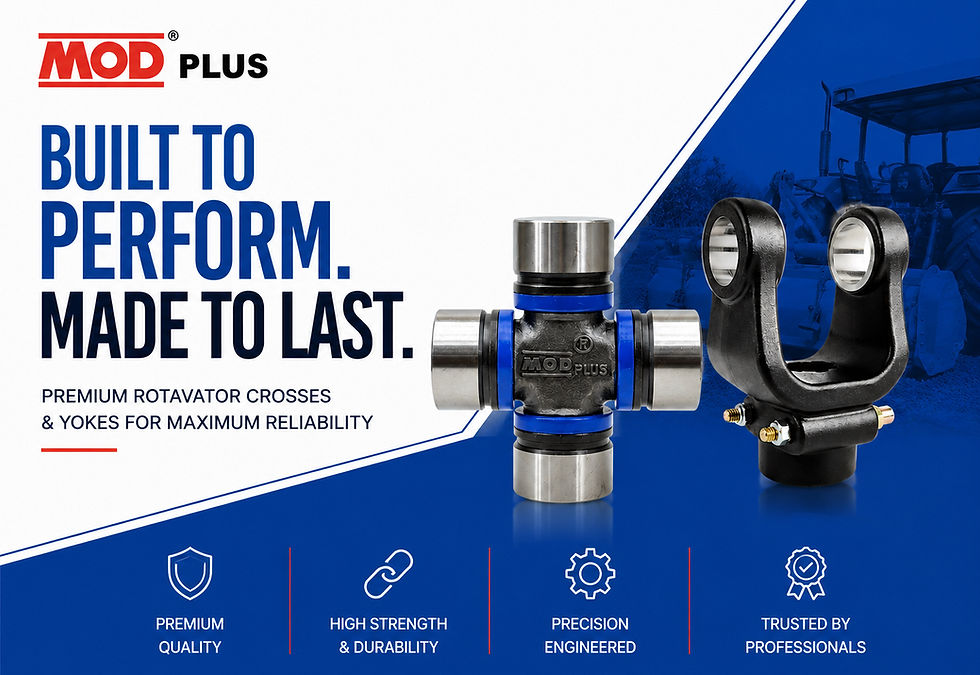
When your inspection confirms a genuine problem, source the replacement from the brand that's supplied Indian farms since 1978. MOD Plus is India's leading aftermarket brand for rotavator cross and yoke parts — an OEM-grade range distributed pan-India from our Delhi facility, trusted by workshops and dealers nationwide who can't afford a repeat failure. Below is our full working range of rotavator crosses, yokes, and related components.
UJ Crosses
Spring Yokes
Half Yokes & Triangle Yokes
Shearing Bolt & Safety Yokes
Solid & Plain-Bore Yokes
Mini Rotavator Range
Triangular Tubes & Gyrovator Fittings
40 distinct product pages linked above, pulled directly from MOD's live Rotavator Parts category — every one built OEM-grade and backed by decades of driveline expertise, which is what makes MOD Plus India's go-to name for rotavator cross and yoke replacements.
Ready to Stop Guessing?
A worn cross doesn't wait for a convenient day to fail. Match your size, order genuine, and get back to the field with confidence — MOD Plus has kept Indian rotavators running since 1978, reaching every state so downtime never lasts longer than it should.


Comments