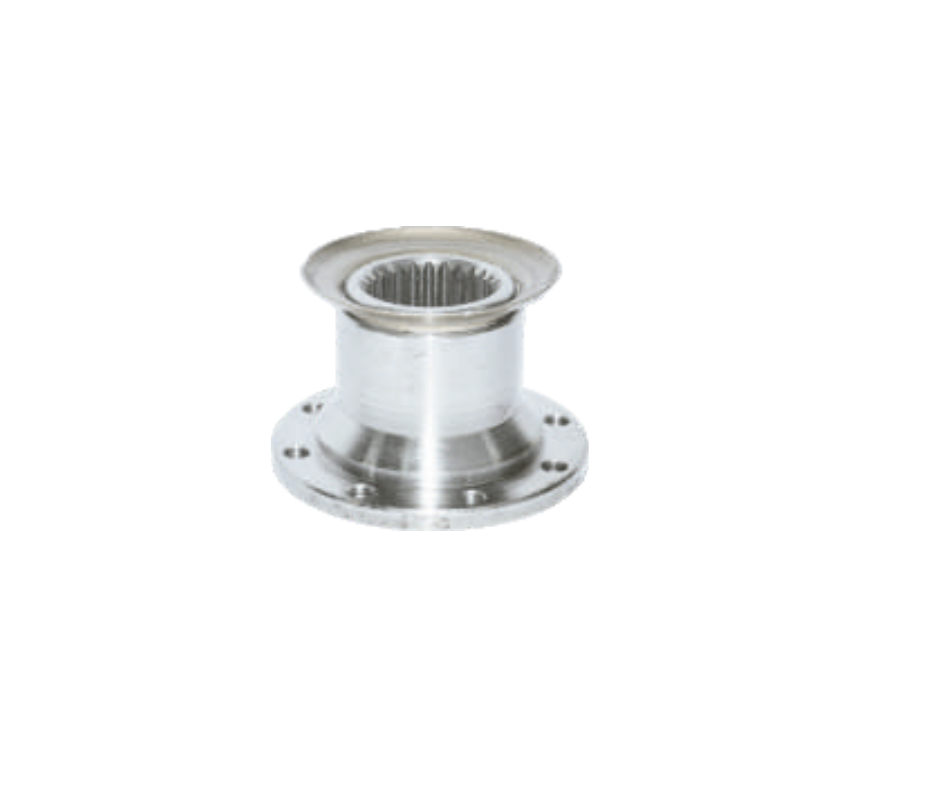
🔧 Gear Coupling / Gear Box Coupling Flange – Leyland L/L 2214 & Taurus
📌 What It Is
The gear coupling (also called a gear box coupling flange) is a driveline component fitted at the gearbox output that connects the transmission to the propeller/driveshaft. It features serrated/splined faces that provide positive mechanical engagement, transmitting torque reliably from the gearbox into the driveshaft with reduced backlash and vibration — crucial in heavy‑duty commercial trucks like the Leyland L/L 2214 and Leyland Taurus.
📊 Typical Specifications
| Specification | Details (Typical / Catalog) |
|---|---|
| Application | Leyland L/L 2214 & L/L Taurus |
| Part Reference (OEM) | F14351711 (Gear Coupling Flange) |
| Splines / Teeth | 28 teeth (serrated / splined) |
| Bolt Holes | 4 holes (standard mounting pattern) |
| Bolt Size | ~12 mm bolt size class (catalog reference) |
| Plate Diameter | ~175 mm (7″) flange plate diameter |
| Bolt Circle | 8 holes pattern spacing (but 4 holes actual mounting) in catalog listings |
| Height / Thickness | ~62 mm (approx. flange thickness) |
| Plate Type | Round, serrated/splined face for positive engagement |
📌 Note: In parts catalogs this gear coupling is often listed as:
“Gear Coup. L/L 2214, Tauras – 28 splines, 175 mm plate, 4 × bolt pattern” — O.E.M Ref: F14351711.
⚙️ How It Works
✔ Torque Transfer: The flange bolts to the gearbox output shaft and engages the propeller shaft companion flange/yoke.
✔ Positive Engagement: Serrated/splined surface ensures there is no slip under heavy torque loads — common in trucks with full loads and rugged terrain.
✔ Vibration Reduction: By maintaining a tight mechanical lock, it reduces driveline vibration and drivetrain shock from starts/stops and road irregularities.
🚛 Where It Fits
On both the Leyland L/L 2214 and Leyland Taurus drivetrains, this flange is located at the rear output of the gearbox. It provides the mechanical connection to the front of the propeller shaft, completing the power path to the rear differential and axle.
Sequence:
Engine → Clutch → Gearbox Output → Gear Coupling Flange → Propeller Shaft → Differential → Axles → Wheels
🧰 Why It’s Important
Improves drivetrain durability by preventing slip and minimizing shock loading.
Ensures long service life of gearbox and propeller shaft interfaces.
Major component in maintaining proper alignment and power transfer quality in heavy truck drivetrains.