

Why Rotavator Cross Fails in India — And How to Choose the Right One for Long-Term Performance
- Sargun Sethi
- Apr 13
- 3 min read

In Indian agriculture, timing is everything. A single breakdown during soil preparation or peak season can delay operations, increase labour cost, and directly impact yield.
Yet one of the most common and overlooked failure points in tractors and implements is the rotavator cross (PTO UJ Cross).
For many farmers an
d dealers, failure feels sudden. In reality, it’s predictable—and preventable.
What is a Rotavator Cross and Why It Matters
A rotavator cross is a heavy-duty UJ Cross used in PTO (Power Take-Off) systems, responsible for transferring power from the tractor to the rotavator.
It operates under:
Continuous torque
Sudden load variations
Soil resistance
Misalignment during operation
This makes it one of the most stressed components in agricultural machinery.
To understand the broader system, refer:👉
Why Rotavator Crosses Fail So Frequently in India
Unlike controlled environments, Indian farming conditions push components to their limits.
1. Extreme Load Conditions
Hard soil, deep tilling, and continuous usage create sudden torque spikes.
2. Low-Quality Crosses in the Market
Many crosses look similar but lack proper heat treatment and bearing quality.
3. Dust, Mud, and Moisture Entry
Contamination damages needle bearings and reduces smooth rotation.
4. Improper Fitment
Using incorrect size or lock type leads to misalignment and early failure.
The Hidden Cost of a Failed Rotavator Cross
Most buyers focus only on purchase price.
But failure leads to:
Work stoppage during critical farming windows
Increased labour and fuel cost
Damage to PTO shaft and connected components
In agriculture, downtime costs far more than the part itself.
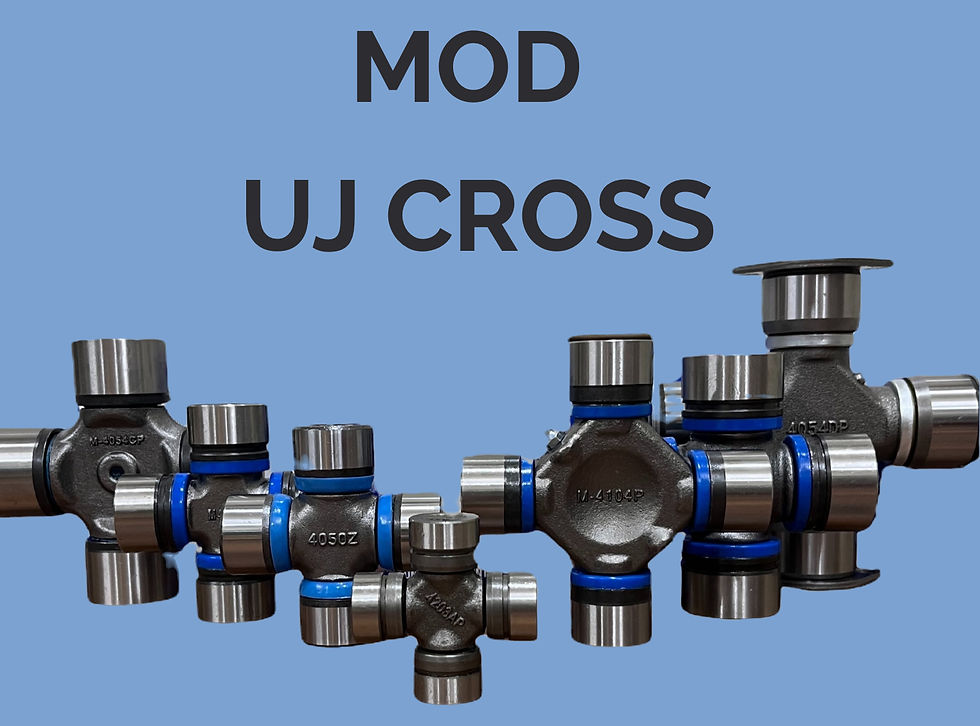
MOD Plus Rotavator Cross Range — Built for Indian Farming Conditions
MOD Plus offers a specialized range of rotavator and PTO UJ Crosses designed for durability under real field conditions.
Explore the range here:👉 https://www.modspareparts.com/ujcross
These crosses are suitable for:
Mahindra tractors
Swaraj tractors
Sonalika tractors
John Deere tractors
PTO-driven rotavators and implements

Application-Specific Engineering (What Actually Makes the Difference)
Not all UJ Crosses are the same.
MOD Plus focuses on:
Precision-machined cross journals
High-strength material for torque resistance
Better bearing performance under load
Accurate fitment across tractor and implement combinations
For deeper insight into UJ Cross engineering, read:👉 https://www.modspareparts.com/post/the-complete-guide-to-uj-cross-mod-spare-parts
How to Choose the Right Rotavator Cross (Buyer Guide)
Before buying, evaluate:
Tractor model compatibility (Mahindra, Swaraj, etc.)
Rotavator type and load requirement
Cross size and locking mechanism
Quality of bearings and finish
Choosing the wrong cross results in:
Misalignment
Frequent breakdowns
Reduced machine efficiency
Why Dealers and Farmers Are Moving Toward Quality
The market is changing.
Earlier:
Focus was on cheapest option
Now:
Farmers want reliability during season
Dealers want fewer complaints
Mechanics prefer parts that last
Reliable components are no longer optional—they are expected.
Final Verdict
Rotavator cross failure is not random—it is the result of:
Load stress
Poor quality
Incorrect selection
The solution is not repeated replacement—but choosing the right component once.
For farmers, dealers, and mechanics, the shift is clear:
From cheap parts to reliable, application-specific solutions built for Indian conditions.
Frequently Asked Questions (FAQs)
What is a rotavator cross and why is it important?
A rotavator cross is a type of UJ Cross used in the tractor’s PTO system to transfer power to the rotavator. It plays a critical role in handling torque and ensuring smooth operation during soil preparation.
Why do rotavator crosses fail so often in India?
Rotavator crosses fail due to heavy load conditions, poor-quality materials, dust and mud contamination, and improper fitment. Indian farming conditions put extreme stress on these components.
How can I identify a failing rotavator cross?
Common signs include unusual vibration, noise during operation, reduced efficiency, and looseness in the PTO shaft connection.
Can a low-quality rotavator cross damage other parts?
Yes, a poor-quality cross can cause misalignment and vibration, which may damage the PTO shaft, yokes, and other driveline components.
How do I choose the right rotavator cross for my tractor?
You should select based on your tractor model, rotavator type, load requirement, and ensure the cross is made with high-quality material and offers precise fitment.
Because in agriculture, delays are costly—and reliability is everything.


Comments