

Tie Rod End – The Complete Guide by MOD
- Sargun Sethi
- Aug 14, 2025
- 5 min read

When it comes to controlling a vehicle—whether it’s a light commercial workhorse like the Tata Ace, a rugged Mahindra Bolero pickup, a field-proven Massey Ferguson 241 tractor, or a John Deere 5310 harvester—there’s one small but critical component that keeps the steering precise and predictable: the tie rod end. In the world of automotive and agricultural engineering, this part is often overlooked until something goes wrong, but in reality, it is one of the most important elements for both safety and performance.
At MOD Spare Parts, we understand that the tie rod end isn’t just a replaceable component—it’s a link between the driver’s intent and the vehicle’s actual movement. This guide takes you through everything there is to know about tie rod ends, from their role and manufacturing to their applications in different vehicles and how MOD ensures you get OEM-grade quality every time.

Understanding Tie Rod Ends – Steering’s Silent Workhorse
A tie rod end is part of the steering linkage system, connecting the steering rack or drag link to the steering knuckle. In simpler terms, it translates the movement of the steering wheel into the turning of the wheels on the road or in the field. Without it, the entire steering mechanism would be incomplete, leaving a vehicle unresponsive and unsafe.
For light commercial vehicles like Tata Ace, Mahindra Bolero Pickup, and Ashok Leyland Dost, the tie rod end has to handle high mileage, heavy loads, and rough road conditions. In agricultural machinery such as Massey Ferguson, Swaraj, and John Deere tractors, it has to perform reliably in mud, dust, and uneven terrains. In harvesters and rotavators—such as Shaktiman or Fieldking—the tie rod end needs to remain sturdy despite constant vibrations and directional changes during operation.
Every tie rod end has two main responsibilities:
Maintain alignment of the wheels to ensure even tire wear.
Provide responsive steering for safety and maneuverability.
These responsibilities may seem straightforward, but the engineering precision behind them is anything but simple.
Inside the Workshop – How a Tie Rod End is Made
The manufacturing of a tie rod end at MOD follows a precise, quality-controlled process to ensure every unit meets OEM-grade standards.
The process begins with material selection. Tie rod ends require high-strength steel alloys that can handle both tensile and shear stresses. At MOD, we source only premium-grade steel billets and forgings, ensuring a long service life.
Next comes forging and shaping. The steel is heated to a specific temperature in induction furnaces and then forged into the basic body shape. This forging step not only gives the tie rod end its form but also improves the grain structure of the metal, enhancing its strength.
Following forging, CNC machining takes over. This stage brings the component to precise dimensions, ensuring perfect fitment with the steering linkage. Every taper, thread, and ball seat is machined to within microns of tolerance.
The ball stud—the part that swivels inside the tie rod end—receives special treatment. It is hardened using heat treatment processes like carburizing or induction hardening to provide a wear-resistant surface while keeping the core tough and flexible.
Once the main body and ball stud are ready, assembly begins. The ball stud is inserted into the housing with a bearing surface, usually a special polymer or metal insert, which allows smooth pivoting. The unit is then filled with grease to minimize friction and sealed with a dust boot to keep contaminants out.
Every MOD tie rod end undergoes quality testing—from torque checks to fatigue tests—to ensure it can handle real-world stresses. Only after passing these tests does it get packaged and labeled for distribution.
From Factory Floor to Field – Where Tie Rod Ends Prove Their Worth
Tie rod ends work in a variety of environments, and their performance is critical whether the vehicle is on asphalt or in deep field mud.
In commercial trucks and pickups like Tata 407, Mahindra Jeeto, or Ashok Leyland Boss, tie rod ends must maintain wheel alignment despite constant stop-and-go movement, potholes, and heavy payloads.
In tractors such as the Massey Ferguson 241 DI, Swaraj 855 FE, and John Deere 5050D, they endure harsh agricultural conditions—rocky fields, deep ruts, and continuous steering corrections.
In harvesters like Claas Crop Tiger or Kartar 4000, tie rod ends must stay reliable during long harvesting hours when any failure could halt operations entirely.
Even in rotavators—where steering components experience indirect stress through towing and maneuvering—the tie rod end plays its part in ensuring the towing tractor handles predictably.
The Bigger Picture – Working Alongside the Driveline
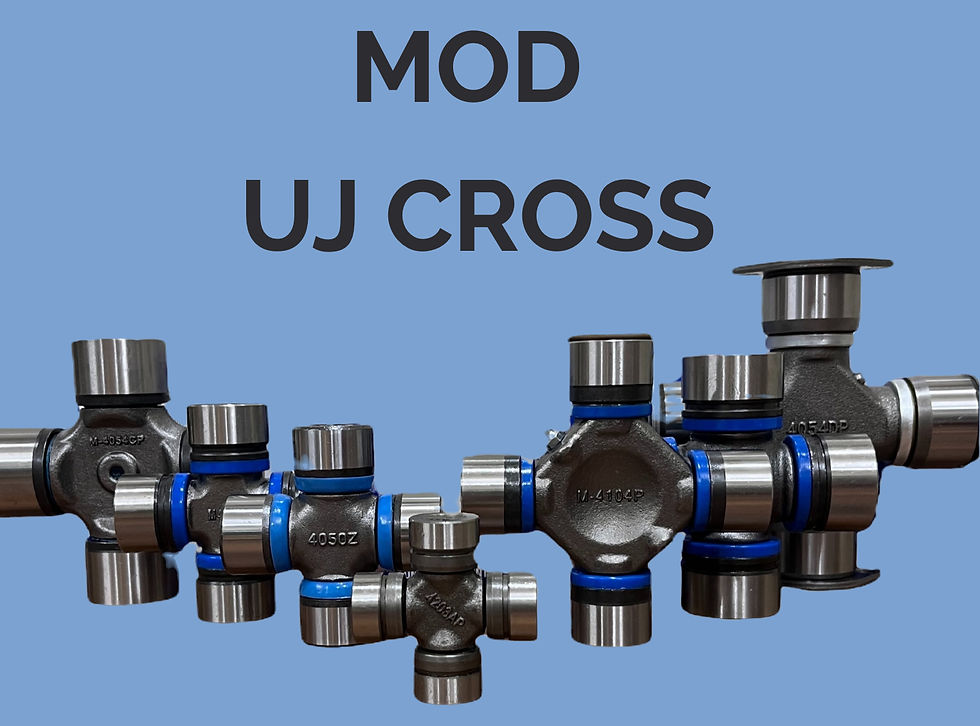
While tie rod ends are a part of the steering system, they operate in close harmony with other driveline and chassis components. A high-quality propeller shaft, UJ cross, yokes, bevel kits, and steering cross assemblies all contribute to overall vehicle performance. If any one of these components fails, it can lead to uneven stress on the tie rod ends, shortening their lifespan.
At MOD, we not only supply tie rod ends but also provide the full range of related components to ensure the entire steering and driveline system operates at peak efficiency. This integrated approach helps customers maintain their fleets and machinery with fewer breakdowns and longer service intervals.
Compatibility That Counts – From Tata Ace to John Deere 5310
One of MOD’s strengths is our wide compatibility across brands and models. Our tie rod ends are designed for vehicles including:
Tata – Ace, 407, 709, 1109
Mahindra – Bolero Pickup, Jeeto, Supro
Ashok Leyland – Dost, Boss
Massey Ferguson – 1035 DI, 241 DI, 5245 DI
John Deere – 5050D, 5310, 5405
Swaraj – 735 FE, 855 FE
Shaktiman and Fieldking rotavators
Kartar, Preet, and Claas harvesters
This wide coverage ensures that whether you’re managing a fleet of commercial vehicles, a collection of agricultural tractors, or specialized harvesting equipment, MOD has the right tie rod end for your needs.
Why MOD Tie Rod Ends Stand Apart in the Aftermarket
The aftermarket is flooded with low-cost, low-quality steering components. At MOD, we take the opposite approach—prioritizing OEM-grade materials, precision manufacturing, and rigorous quality control. Our customers trust us because every tie rod end we sell delivers the steering accuracy, durability, and reliability they expect.
From the highways of long-haul trucking to the furrows of freshly tilled fields, MOD tie rod ends prove their worth daily. By combining industry expertise with modern production methods, we give drivers, farmers, and fleet operators the peace of mind that their steering systems won’t let them down when it matters most.


Comments